


Overweight Dogs and Dog Obesity: How Extra Weight Impacts Behaviour, Health and Training
It’s easy to miss the signs that your dog is carrying extra weight -
especially when you see them every day. A few extra treats here, less movement there, and suddenly you’re wondering why your once-bouncy dog seems a little slower, less engaged, or more easily tired.

Overweight dogs are incredibly common, but that doesn’t make the issue less important.
Dog obesity isn’t just a matter of appearance. It affects everything: from how your dog moves to how they feel, how they behave, and even how well they can learn.
And if you’re someone who relies on food in training (as most trainers do to some extent), it can feel like an impossible puzzle: how do you reinforce your dog without overfeeding them?
In this post, I’ll walk you through what I’ve learned from supporting clients and my own dogs through this challenge - with kindness, honesty, and practical strategies that work in the real world.
Why Dog Obesity Is So Common - and Why It Matters
Over 50% of pet dogs in some Western countries are now considered overweight or obese. That excess weight puts strain on your dog’s joints and muscles, reduces mobility, and can significantly shorten their lifespan.
Even a relatively small amount of extra body fat can increase the risk of:
Joint pain and osteoarthritis
Back injuries (especially in breeds like Dachshunds)
Diabetes and heart problems
Skin issues and inflammation
Heat intolerance
Reduced quality of life and decreased energy
From a behavioural standpoint, overweight dogs often move less, play less, and tire more quickly. That can affect how we train, how we manage behaviour problems, and how much joy our dogs get from daily life.
How to Tell if Your Dog Is Overweight
If you’re wondering how to tell if your dog is overweight, a couple of simple tools can help.
One method is the knuckle test. When you gently run your hands over your dog’s ribs, you should be able to feel them easily without pressing too hard - similar to how your knuckles feel. If the ribs are difficult to find, your dog may be carrying excess weight.

Another option is to use the WSAVA Body Condition Score chart, which provides visual and physical guidelines to assess whether your dog is in a healthy range.

Why Some Dogs Gain Weight More Easily Than Others
It’s not always as simple as "too much food, not enough exercise." Several factors can make a dog more prone to weight gain:
🐾 Breed predisposition
Some breeds are genetically wired to be more food motivated and store fat more efficiently. Labradors, Beagles, Dachshunds, Pugs, and Cavalier King Charles Spaniels are particularly prone to weight gain. For example, many Labradors carry a gene mutation (POMC) linked to increased appetite and reduced ability to feel full.
🐾 Neutering
Spaying or neutering alters a dog’s hormone balance, which can lead to a decrease in metabolic rate and an increase in appetite. This doesn’t mean neutered dogs must gain weight—but their calorie needs may drop by up to 20%, even if their appetite increases.
🐾 Age and lifestyle
Older dogs and dogs with less physical stimulation (especially those with behaviour issues that limit walks or play) are at higher risk. Pain or fear-based reactivity can reduce movement, which reduces calorie burn and increases stress -
all of which can impact weight.
Why Using Food in Training Can Be Tricky—but Worth It
Food is one of the most powerful tools we have in reward-based dog training. It’s convenient, versatile, and taps into a natural motivation for most dogs.
But it also means your dog’s calorie intake can quietly skyrocket - especially when you're working on behaviour modification, reactivity, or recall, which require frequent rewards.
This doesn’t mean you have to stop using food. It means we get clever about how we use it.
How to Use Food in Training Without Overfeeding
Here’s how I help clients strike the balance between training and weight management:
🍽 Use their meals for training
Instead of feeding breakfast or dinner in a bowl, feed it throughout the day during training sessions or enrichment activities. This keeps their calories controlled and boosts their motivation to work with you.
🧩 Make food more exciting
Many dogs who seem “not food motivated” are actually just full or bored. By spreading meals out, removing free access to food, and using variety (like mixing kibble with tiny bits of chicken or cheese), we increase food drive -making it easier to use everyday food in training.
🔄 Cut treats into small pieces
Dogs don’t need big treats. A single sausage slice can become 10+ reinforcers. Tiny, frequent rewards work just as well as large ones.
📊 Track calorie intake
Treats and training rewards should ideally make up no more than 10% of your dog’s daily calorie intake. Knowing roughly how many calories your dog needs (based on age, weight, and activity) helps keep things in balance.
How I Support Clients Through Weight Management
When a client’s dog is overweight, I never jump to blame or restriction. Instead, we work together to:
Choose a nutritionally appropriate diet
Calculate daily calorie needs
Assess your dog’s body condition score
Set realistic and compassionate goals
Check in and keep records to track progress without shame
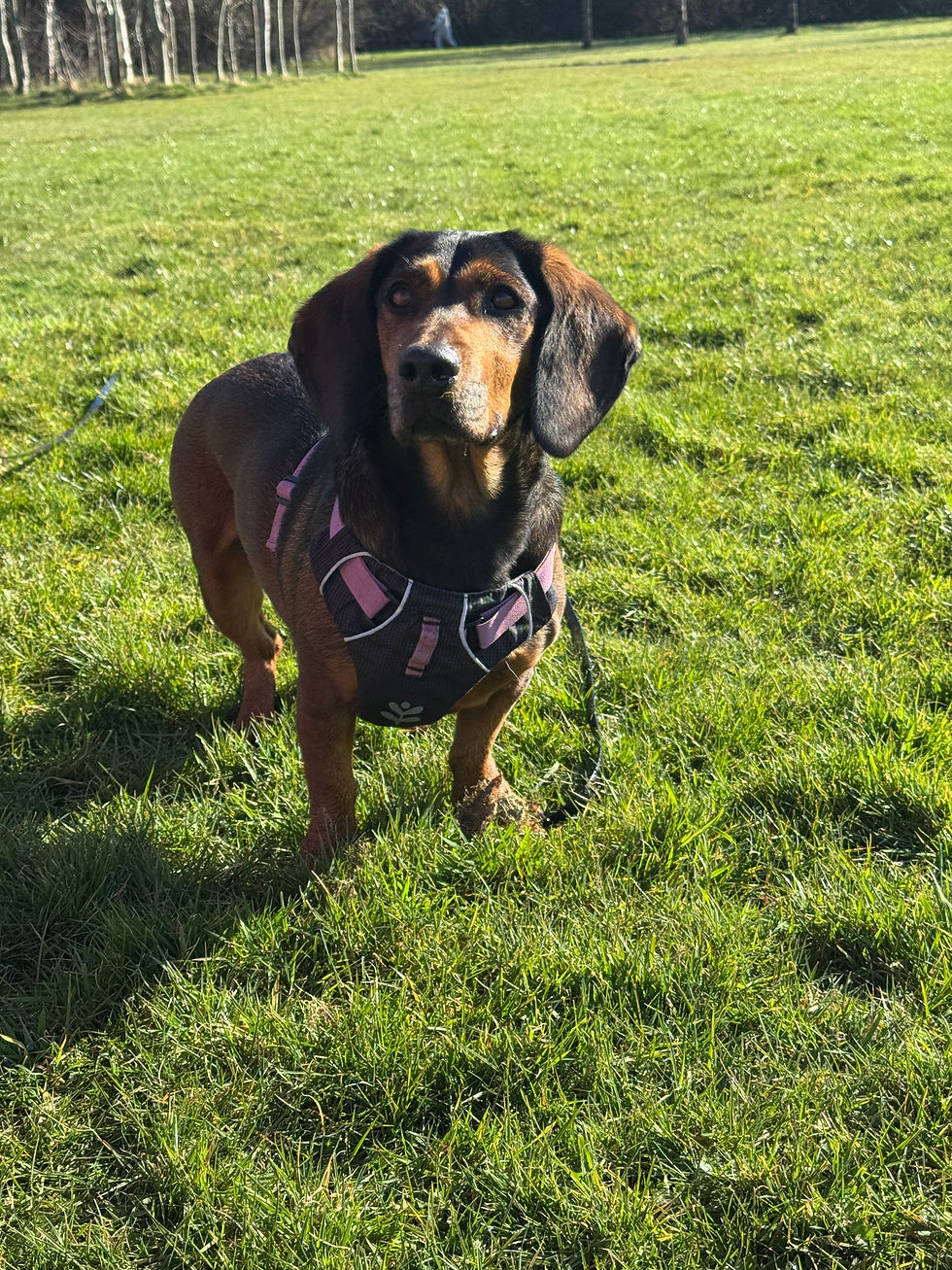
We don’t approach this as a diet. We approach it as a path toward health, energy, and joy. We support your dog’s physical body and their behaviour, with solutions that respect their needs and your real life. As someone who has struggled with my own dogs' weight I know this can be hard, but you can get professional help for this!
How Weight Loss Makes Training Easier
Here’s something I see again and again: as dogs reach a healthier weight, their interest in training grows. They have more energy. They find food more reinforcing. They move more confidently. They re-engage with the world.
I’ve watched dogs go from refusing food to working eagerly for kibble - once the balance shifted and their feeding became structured. The transformation isn’t just physical - it’s emotional.
When food becomes meaningful again, your training becomes more effective. And your dog feels more in tune with their body, their environment and with you.

Ready to Support Your Dog’s Health and Behaviour?
Helping a dog lose weight doesn’t mean giving up treats or joy. It means learning how to use food intentionally.
If you’d like expert support tailored to your dog, I’d love to help. Together, we can create a simple plan that balances behaviour change, enrichment, and long-term wellness.
👉 Book a discovery call to get started - no pressure, just a chat.


Comments